9월 15, 2025
|17분 읽기

B2B 업계는 중대한 단절에 직면하고 있습니다. 현재 B2B 구매자의 75%가 영업사원 없는 경험을 선호하는 반면, 41%의 B2B 마케터는 SEO에서 링크 빌딩이 가장 어려운 부분이라고 인정하고 있으며 이를 효과적으로 수행할 자신감이 없다고 느낍니다 [2]. 이 격차는 불편이 아니라 검색 엔진 알고리즘의 급격한 변화로 만들어진 취약점입니다. CMO와 성장 마케터에게 옛 플레이북은 공식적으로 깨졌습니다. 한때 가시성을 보장하던 전술은 이제 비효과적이거나, 더 나쁘게는 Google에 의해 적극적으로 페널티를 받습니다. 적응에 실패한 브랜드는 이상적인 고객에게서 보이지 않는 위험에 직면합니다.
Tactics that once guaranteed visibility are now ineffective or, worse, actively penalized. Brands that fail to adapt risk becoming invisible to their ideal customers. On the front lines of this evolution, we see one strategy consistently closing this gap: Digital PR. It’s the engine for building high-authority backlinks that drive trust, establish credibility, and accelerate the modern sales cycle. 이 글은 이 새로운 환경을 탐색하는 B2B 리더들을 위한 결정적 가이드입니다. 신선한 데이터와 인사이트를 활용하여 현재 전략을 점검하고, 잠재 파트너를 평가하며, AI 기반 검색과 자가 주도 구매자의 세계에서 실제 수익을 창출하는 투자에 집중할 프레임워크를 제공합니다.
In 2025, two major trends are revolutionizing the B2B marketing landscape:
Google’s March 2024 core and spam updates were a watershed moment, driven by the need to combat the flood of AI-generated, low-value content that was cluttering search results. The company announced its changes would “collectively reduce low-quality, unoriginal content in search results by 45%” [6]. This wasn’t a minor adjustment; it was a purge of websites built to manipulate rankings rather than serve users. The update effectively dismantled the infrastructure of low-value guest post farms, rendering their links worthless overnight. If you’re wondering why these updates happened now, it’s largely due to the rapid rise of AI tools creating spammy content at scale, prompting Google to prioritize user value over manipulation.
This algorithmic shift perfectly mirrors a powerful trend in buyer behavior. Today’s B2B buyers are researchers. A recent McKinsey survey revealed that one-third of B2B customers prefer digital self-serve options at any given stage of the buying journey, using credible, third-party content to research solutions [3]. They actively seek authoritative information to guide high-stakes decisions, with 74% using online platforms to purchase products [7].
This is where Google’s emphasis on E-E-A-T (Experience, Expertise, Authoritativeness, and Trustworthiness) becomes the central pillar of B2B SEO. Authority is no longer declared. It’s earned and validated by real media coverage and editorial links. For those unfamiliar, E-E-A-T is Google’s framework for evaluating content quality—introduced in 2014 as E-A-T and expanded in 2022 to include “Experience” to reward real-world knowledge. In B2B, demonstrating these qualities is non-negotiable. True authority isn’t just claimed on a company blog; it’s validated by mentions, citations, and coverage in reputable, industry-leading publications. 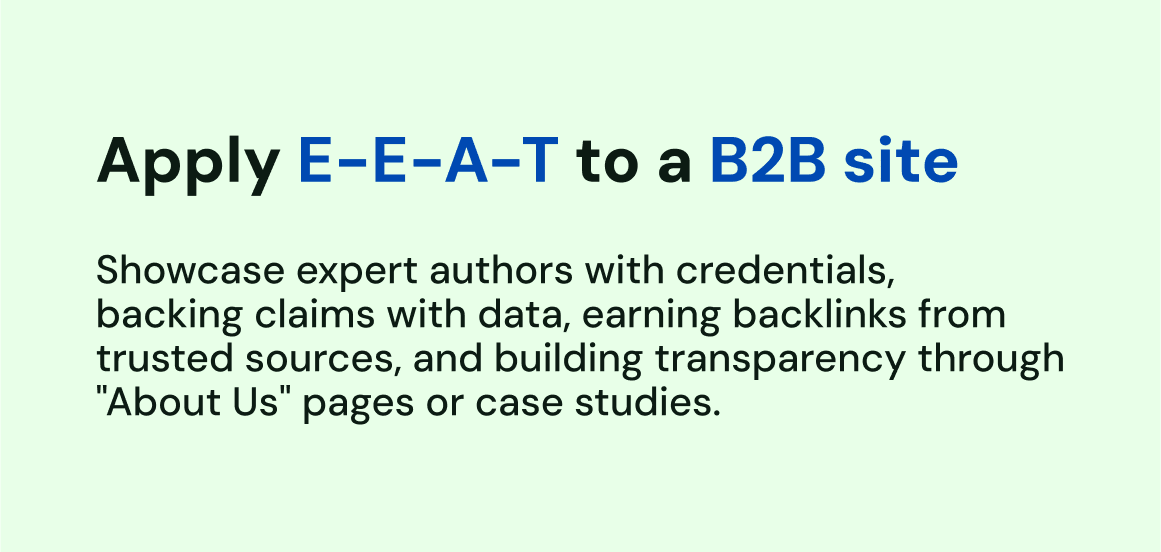
Compounding this is the rise of AI-powered search. With tools like Google’s AI Overviews now dominating search results—appearing in up to 72% of B2B buyer research queries [8]—the game is no longer just about ranking #1. It’s about being featured within the AI-generated answer. Since these AI models are trained to synthesize information from sources they deem most authoritative, the value of being cited in a trusted news outlet or industry journal has grown exponentially. The focus must shift from a narrow obsession with keywords to a broader strategy of shaping a compelling brand narrative that earns real, editorial links. To underscore the urgency, consider that 39% of B2B marketers are planning to increase investment in AI for content creation to enhance their strategies, from content ideation to personalized outreach [9]. This integration not only streamlines processes but also ensures campaigns remain relevant in an AI-driven search ecosystem where 49.2% of businesses using AI report improved search rankings [2].
With a typical B2B sales cycle lasting anywhere from 6 to 12 months, trust is the most valuable currency. Digital PR transforms link building from a technical SEO task into a strategic, trust-building engine that delivers measurable results throughout this long journey.
Digital PR is the practice of earning high-quality backlinks, media mentions, and social engagement to improve a brand’s online presence and SEO performance. In the B2B context, it focuses on building long-term relationships with industry journalists and influencers by providing them with value-driven content, such as proprietary research or expert insights. Unlike general PR, B2B Digital PR is highly targeted, often integrating with ABM to align with specific buyer personas. It stands in stark contrast to the failing tactics of the past. While traditional guest posting is increasingly seen as ineffective due to its association with spam [10], Digital PR focuses on earning high-authority, editorial links from genuine media outlets. These are the links that Google’s algorithms are designed to reward, with 73% of link builders planning to use Digital PR tactics in 2025 [11].
The data is clear:
:”
이메일로 KKBC의 새 보고서와 인사이트를 받아보세요.
 KR
KR 

 KR
KR 


